Nov 3, 2020

Fat Wood Revisited

    https://drive.google.com/uc?export=view&id=1QrDfm7967uQOowLA0tyDCp057_PjHnsw

   A recent online conversation on the topic of fat wood and bush crafting in general has brought me back to blogging and hopefully helping people identify and harvest their own but first a description.

  Typically fat wood is produced when the sap settles in cut stumps, roots and branch junctions after a tree dies some unnatural death with the root system still producing sap . The lighter volatile fractions(my conjecture) evaporate over time along with moisture and leave behind the Terpene rich resin impregnated wood which is highly flammable when shaved off.  This process could take upwards of a decade or more to happen.

  For the longest time I had trouble finding sources or identifying fat wood not knowing what to look for(expecting to find entire stumps like down south with the Long Leaf)so I hope this helps.

 Location is important, first you need to find an area where pines are are growing or where they have grown. Once you identify your source a pine sol smell of the shavings will confirm it. Old cedar to me looks almost identical either but you will not have the turpentine/pine sol smell and will not yield any.

One of the easiest sources to find get it from at least in my location in South Central Pa. is old downed trunks at the branch junctions.  https://drive.google.com/uc?export=view&id=1mxdFNVNCon-tbeHcaXru2Dm_pXa7i9pi https://drive.google.com/uc?export=view&id=1fxvZbX3VuPP1JO8spxt-yVPpBHX1rTChhttps://drive.google.com/uc?export=view&id=1SBW6evbJAaeL5E-Fa-HdRoAOyq4A_Ikm

Once you think you have found a suitable downed pine start by checking by making a cut along the base of a branch. It should feel waxy and have a strong turpentine oder.

https://drive.google.com/uc?export=view&id=1M3mb22lJji3roz-Gbn_yMB-_qwA-Ohf5

Use whatever cutting implement you have(in this case an ancient Gerber saw) and cut the branch as close to the trunk as possible.

https://drive.google.com/uc?export=view&id=1PGzmAYn37-gYRG8AiozHAjC418qD7vHqhttps://drive.google.com/uc?export=view&id=1bXnFkn9H69-sWIkme3JlmP3ObdQTu-RQ

Split it down with an ax or batoning with your knife and there you go, one of the best backwoods fire starters you can carry along with you.

https://drive.google.com/uc?export=view&id=1JfVjttijiRTZ6kyxJEJw2XO37KH7Sp4j


Have fun finding your own source, Soon I hope to do one on using fatwood and fire steel use to start your fires.

Stay safe!

Bob


Mar 29, 2020

Mullien

     On the way to the farm to work on a Gehl loader I got to thinking about the plants coming on and Mullein stands at the top of the list on multi use,
both medicinal and for utility.
      Mullein prefers wasteland that is dry and has a two year cycle it appears, The first year soft leaves that lie close to the ground and the second a woody stalk, growing three to five foot in height that gets a head of small yellow flowers.

  Given the current state of affairs we are in a natural toilet paper comes to mind. Given it's soft velour like surface it has the ability to hold water making it useful for hygiene when dipped in water as it has an almost sponge like ability.Also this ability to hold fluids make it a natural dressing for wounds in a pinch.


   From the book Indian Herbology Of North America by Alma R. Hutchens. The smoke is inhaled from the leaves to relieve chest congestion as is mentioned in Tom Browns book guide to Wild Edible and Medicinal Plants which also includes the steam from the boiled leaves while making tea relieves nasal congestion and the tea when drank relieves stomach cramps.
   Culpepper's Complete Herbal and English Physician from the early 17th century uses a small quantity of the root given in wine for for stomach issues as well. There are numerous other uses which are not mentioned here.


   By and far my favorite use of this plant is using the woody stalk in primitive fire making using the stalk as a hand drill along with a suitable hearth of Basswood or Sycamore.


  This article is for entertainment and historical purposes only and not to be used as medical advice.

Stay safe
Bob

Mar 15, 2020

History Around Us: Fort McDowell (McDowell's Mill)

   Located in the village of Marks is the site of the Pennsylvania frontier fort at McDowell's Mill.
    From the marker
    This strong marks the sight of the fort at McDowell's Mill. Erected by John McDowell before 1754 it was used as a base of supplies and as a magazine until the erection of Fort Loudon in 1756. The military road from Pennsylvania connecting with the Braddock at Turkey Foot was built from this point in 1755 under the supervision of Col. James Burd. During the period of Indian hostility the fort at McDowell's Mill was the scene of many thrilling events.

From the book The Indian Wars of Pennsylvania by C.Hale Sipe
Pg.292
Massacre Near McDowell's Mill 
Early in November, 1756, the beautiful valley of the Conococheague, in Franklin County, was again devastated and many of 
its inhabitants were killed by the hostile Indians. Robert Callender, writing from Carlisle, on November 4th, thus informed Governor Denny of these atrocities: 
"This Day I received Advice from Fort McDowell that, on Monday or Tuesday last, one Samuel Perry, and his two Sons went from the Fort to their Plantation, and not returning at the time they proposed, the Commanding Officer there sent a corporal and fourteen Men to know the Cause of their Stay, who not finding them at the Plantation, they marched back towards the fort, and on their Return found the said Perry killed and scalped, and covered over with leaves.
 Immediately after a Party of Indians, in Number about thirty, appeared and attacked the soldiers, who returned the Fire, and fought for sometime until four of our People fell ; the rest then made off, and six of them got into the fort, but what became of the rest is not yet known; there are also two families cut off, but cannot tell the Number of people. It is likewise reported that the enemy in their retreat burnt a Quantity of Grain and sundry Houses in the Coves." 
(Pa. Archives, Vol. 3, page 29.) 

Four days later. Colonel John Armstrong wrote Governor Denny, from Carlisle, giving the list of the killed and missing in this bloody raid, as follows: 
"Soldiers Kill'd — James and William McDonald, Bartholomew McCafferty, Anthony McQuoid. 

ATROCITIES IN THE SUMMER AND AUTUMN OF 1756 293 
"Of the Inhabitants Kill'd— John Culbertson, Samuel Perry, 
Hugh Kerrel, John Woods, with his Wife and Mother-in-law, 
Elizabeth Archer, Wife to J no. Archer. 
"Soldiers Missing — James McCorkem, William Cornwall. 
Of the Inhabitants Missing — Four Children belonging to 
John Archer, Samuel Neely, a Boy, James McQuoid, a Child." 
(Pa. Archives, Vol. 3, pages 40 and 41.) 

Within sight of the location exists the remnants of an old cemetery with stone markers in the corner. I can only wonder if the remains of some of the mill inhabitants lay here.
Stay safe
Bob

Mar 8, 2020

History Around Us:THE GREAT COVE MASSACRE

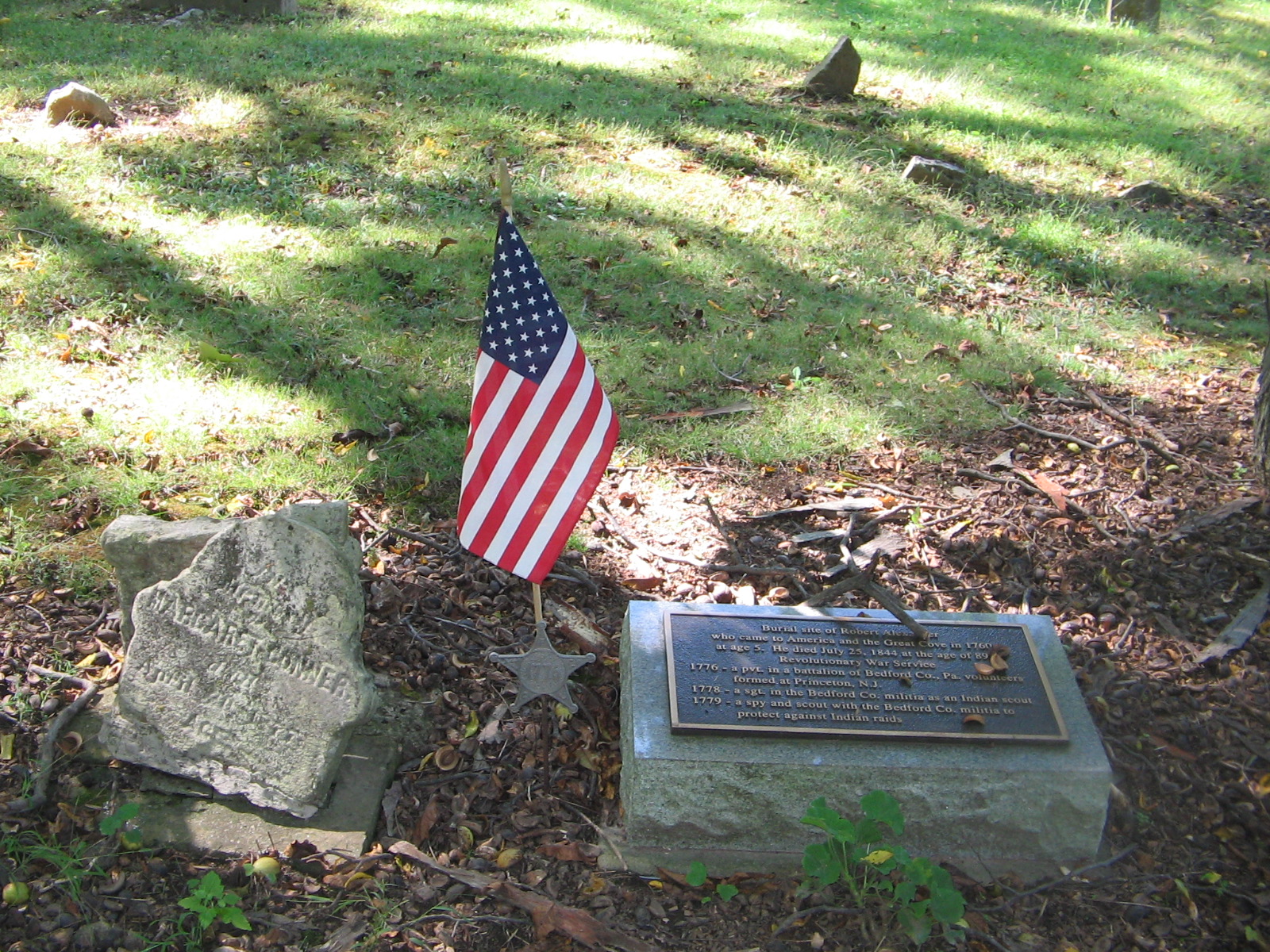
On a outing several weeks ago for a BCUSA Bushclass I was lucky enough to find the location where the settlers from the massacre at Great Cove are buried and took some pics.


This is from the document
The History of bedford, Somerset and Fulton Counties, Pennsylvania


FALLING SPRINGS, Sabbath Morning, Nov. 2, 1755.
To the Inhabitants of the Lower Part of the county of Cumberland:
Gentlemen, - If you intend to go to the assistance of your neighbors, you need
wait no longer for the certainty of the news. The Great Cove is destroyed.
James Campbell left his company last night and went to the fort at Mr. Steel's
meeting-house and there saw some of the inhabitants of the Great Cove, who gave
this account, that as they came over the hill they saw their houses in flames.
The messenger says that there are but one hundred, and that they are divided
into two parts; the one part to go against the Cove, and the other against the
Conolloways, and that there are two French among them; they are Delawares and
Shawnees. The part that came against the Cove are under the command of Shingas,
the Delaware king. The people of the Cove that came off saw several men lying
dead; they heard the murder shout and the firing of guns, and saw the Indians
going into their houses that they had come out of, before they left sight of the
Cove. I have sent express to Marsh Creek at the same time I send this; so I
expect there will be a good company there this day, and as there are but one
hundred of the enemy, I think it is in our power, if God permit, to put them to
flight, if you turn out well from your parts. I understand that the West
settlement is designed to go if they can get any assistance to repel them. All
in haste, from
Your humble servant,
BENJAMIN CHAMBERS.


Sacred Ground.

Stay safe
Bob

Feb 23, 2020

Thinking about writing again.

   "Is anybody out there" From a Pink Floyd song if I remember right.
It's been a long time, five years maybe but I'm thinking about writing the blog again which I enjoyed a lot. I'm still going to do bushcraft and history but may branch out.
If anybody is still out there let me know, what you liked, disliked or what you want to read.
I take all criticism as constructive.

Stay Safe
Bob

May 10, 2014

5 in 1 Bushkey from SharkTinderbox; A Link

     Here's a review I did a little while ago of the 5 in 1 Bushkey from I purchased from  Shark Tinderbox in the UK.
I must say they are a pleasure to deal with and have an impressive assortment of traditional flint strikers and what not.
http://www.falloutindustries.com/index.php/resources/survival-blogs/entry/5-in-1-bushkey-from-shark-tinderbox