Jul 1, 2026

Enough

 I quietly stepped away from religion years ago. It’s not something I say with anger or bitterness — it simply stopped answering the questions I was carrying.

There’s a line from the movie No Country for Old Men that has always stayed with me. Anton Chigurh asks, “If the rules you followed brought you to this, of what use are the rules?” That question cuts deep, especially when I’ve sat with people who held their faith tightly, only to become afraid when death drew near.

I no longer believe in gods or an afterlife in the traditional sense. Yet I still have feelings I can’t fully explain. I’ve had strong moments where I feel the love of my life and I have known each other before. Our connection is so effortless and natural that I honestly believe we shared a previous life together. I don’t claim to understand how any of this works. It’s just a feeling.

There’s also a story about Kahlil Gibran that has always moved me. A young boy once saw an old man sitting alone, staring at the sunrise. When the boy asked what he was doing, the old man replied, “I am looking at life.” The boy asked, “Is that all?” The old man simply answered, “Isn’t that enough?”

That question lands differently the older I get.

The Tao Te Ching speaks to this same spirit:

“Be content with what you have; rejoice in the way things are. When you realize there is nothing lacking, the whole world belongs to you.”

I know I don’t see the world the same way most people around me do. I’ve learned to live with that quiet loneliness. Even so, I remain deeply thankful to be here, even if only for this brief time.

For me… that is enough.

Mercy

Over the years I have sat with many kinds of death — grandparents, friends, and animals I cared for deeply.

The contrast between the two has stayed with me. Every living thing, whether animal or human, seems to want to see the sun rise one more time. That desire feels universal. And yet, when an animal is suffering, we consider it compassionate to help it pass peacefully. We often deny that same mercy to humans, even when they are in great pain.

There does have to be an end for all of us. This realization eventually led me to step away from the faith I was raised in.

The Grandfathers

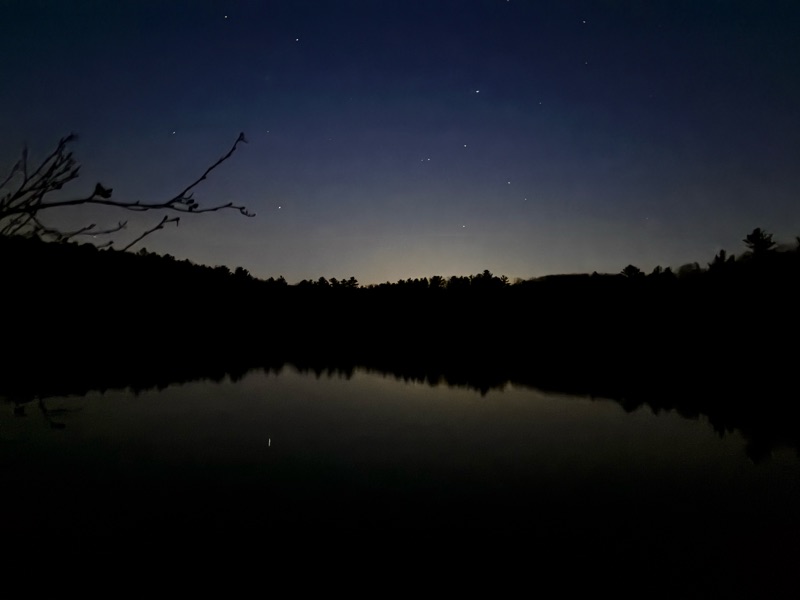
Some of the strongest feelings come to me when I am alone in the woods.

In those quiet places, I sometimes feel the presence of the grandfathers — the ancestors. Not as beings who can help me or speak to me, but simply as a quiet presence. I know this feeling comes from inside my own mind, yet it still feels important to acknowledge them.

Stories from Tom Brown Jr.’s books often come to mind in these moments. When his teacher, Grandfather, wanted the young boy to learn patience and awareness, he would simply say, “Go feed the birds.”

Another time, after the boy had killed his first deer, he was overcome with disgust at what he had done. Grandfather looked at him and said, “Grandson, when you can feel the same way about breaking a blade of grass as you do about that deer, then you will understand.”

I burn sage and speak to the ancestors and grandfathers, not because I believe they can hear me, but because it feels right to show respect for those who walked here long before me. I don’t care for labels. What I feel doesn’t need a name. It simply is.

The Edge

There are certain moments when something inside me shifts.

I cannot force these moments. They come quietly — in certain places or with certain thoughts — and suddenly I find myself at the very edge of what my mind can hold. It feels like standing just on the fringe of seeing something much larger, something just beyond my reach.

This feeling reminds me of Michael Harner’s experience in his book The Way of the Shaman. During an ayahuasca ceremony, he was shown visions that he was told were reserved for the dead and the dying. My own experiences are much gentler and sober, but I understand the feeling of touching a boundary most people never approach.

These experiences eventually brought me to one of the most consistent feelings I have — a quiet presence in the woods.

Among the Stones

Some of my clearest moments have come while walking through old cemeteries.

Standing among the weathered stones, I often think about how every person buried there once lived fully inside their own moment, just as I am living in mine right now. They had ordinary days, small worries, and quiet joys. Most of them had no idea they were becoming history.

That thought stayed with me for a long time. It eventually led me to moments when my own thinking would push even further.

The Constructed World

Over time, I began to see that what we call reality is largely constructed by the mind.

Our senses take in information, and the brain builds a version of the world we can live in. Some even describe this as a “controlled hallucination.” Understanding this didn’t disturb me. If anything, it brought a kind of quiet clarity.

Once I accepted that we’re all living inside our own version of reality, I started seeing the world around me differently — especially the places that hold our history.

A Simple Life and an Unquiet Mind

I grew up on working on a farm in a Christian household. Life was straightforward — you worked, fixed what was broken, and learned to rely on yourself. It was a quiet, practical way to live.

Even so, my mind often wandered into places most people around me never seemed to go. The first real shift happened when I found an old book on Taoism in my grandparents’ house. One simple idea in that book stayed with me: when you miss your mark, first look at yourself.

Years later, while sitting on a tractor, a deeper realization came to me. We come into this world alone, and we leave it the same way. Strangely, that truth didn’t bring fear. It brought me a quiet kind of peace.

That solitude eventually led me to question something even more basic: what is reality itself?

Walking the Boundary

I’ve spent most of my life thinking about things that didn’t fit the world I grew up in. I’ve always loved history, and one thing in particular has always struck me: the people who lived through it never knew they were living in history. They were simply living their lives, just as we are now.

Raised on a farm in a Christian home, I never expected my mind to travel as far as it has. These articles are simply my honest reflections after many years of quiet thought — about life, death, reality, and what it means to be here.

Jun 23, 2026

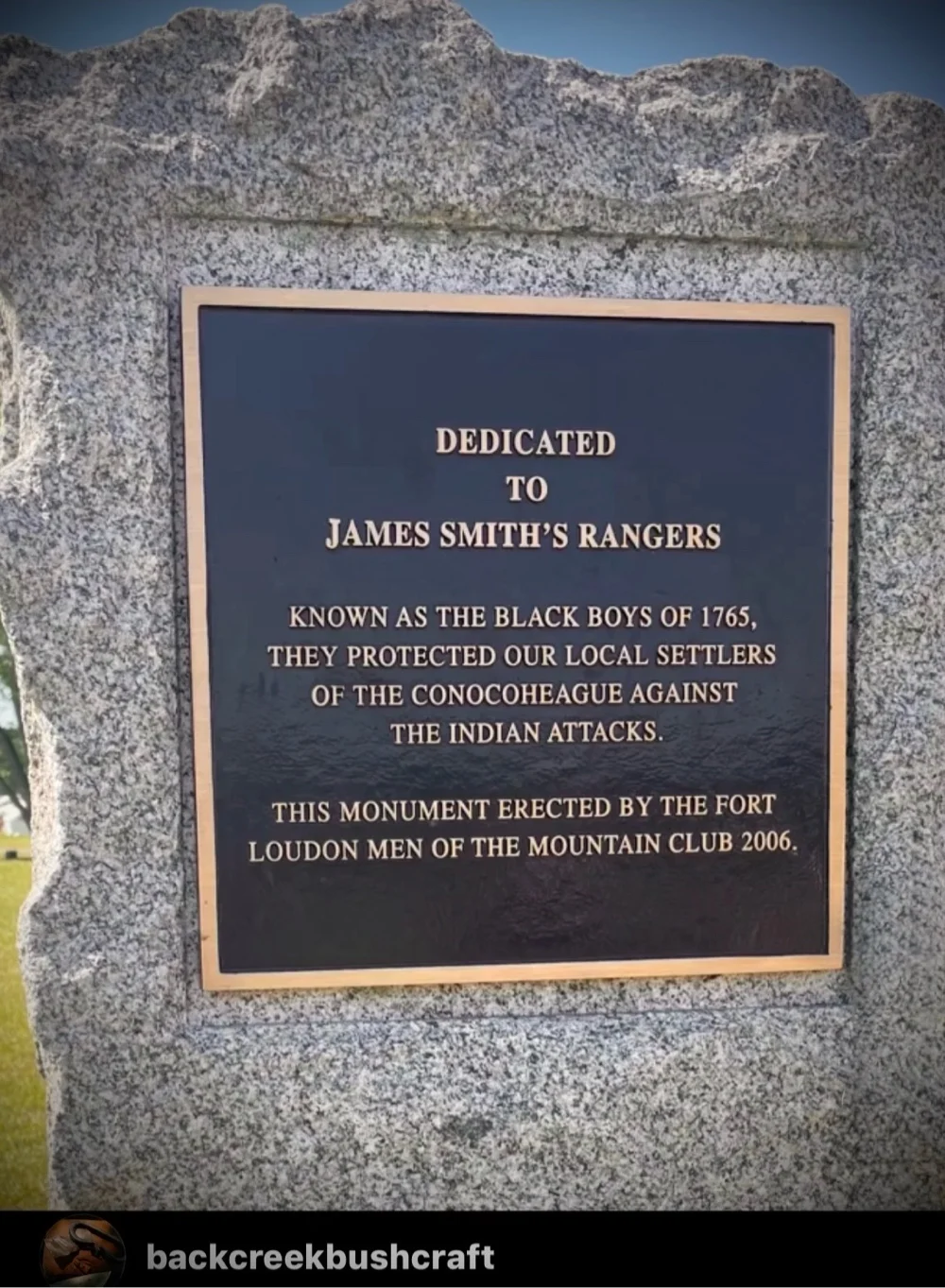
History around us: From Black’s Trading Post to the Siege of Fort Loudoun: The 1765 Frontier Uprising


George Croghan was born around 1718 in Ireland. He arrived in Pennsylvania in 1741 and became one of the most influential and controversial fur traders on the frontier, known as the “King of the Traders.” By the 1760s he also served as Deputy Superintendent of Indian Affairs.

In early 1765, Croghan secretly arranged a large shipment of trade goods — including rum, gunpowder, tomahawks, and scalping knives — in direct violation of the Royal Proclamation of 1763. To the frontier settlers, still mourning loved ones lost in recent massacres and living in constant fear, this was seen as a kind of murder — illegally trading at the expense of the blood and treasure of the frontiers.

On March 5, 1765, the pack train stopped at Pawling’s Tavern south of Greencastle. When a package broke open and spilled what appeared to be scalping knives, word spread rapidly. The train continued north past the old Black’s Trading Post area and was confronted near Justice William Smith’s stone house on North Main Street in Mercersburg. Angry locals demanded the goods be stored at Fort Loudoun. When the drivers refused, James Smith and a small group attacked the train the next day at Sideling Hill and destroyed most of the goods.

James Smith and the Black Boys

James Smith had been captured by Delaware Indians in 1755 at age 18 and lived among them for several years. He trained his men in Native-style warfare, having them dress in Indian clothing and paint their faces red and black. The British referred to them as the Black Boys.

Justice William Smith, who had purchased Black’s mill and trading post in 1759, supported the settlers from his position as magistrate. His house became their headquarters, and he issued official permits for inspected goods.

British troops from Fort Loudoun confiscated nine rifles — essential tools needed for survival on the frontier. To the settlers, this was the final outrage — having their own means of hunting and self-defense taken while goods they believed were meant to kill them flowed westward.

After months of escalating tensions, James Smith gathered several hundred men and besieged Fort Loudoun in November 1765. After two days of surrounding the fort and maintaining fire, the British finally returned the confiscated rifles.

This uprising revealed the deep fury of frontier families who felt abandoned and betrayed by distant authorities more concerned with trade profits than protecting their lives.

Sources:

•  James Smith’s An Account of the Remarkable Occurrences in the Life and Travels of Col. James Smith (1799)

•  Pennsylvania Archives (depositions and letters)

•  smithrebellion1765.com

•  Pennsylvania Historical & Museum Commission records

Research assisted by historical archives and period accounts.

Jun 22, 2026

History around us: The Killing of Frank Jones: Murdered by Union Soldiers in Chambersburg, June 1861

On June 1, 1861, just weeks after the Civil War began, a mob of Union soldiers murdered Frank Jones, a 41-year-old free Black man, in Chambersburg, Pennsylvania.

Jones lived in Wolfstown, a free Black neighborhood on the western edge of town along West Loudon Street, Washington Street, and Water Street, near the Conococheague Creek. He ran a small hotel and sold whiskey there.

That evening, soldiers from the 2nd and 6th Pennsylvania Infantry tried to force their way into his home. When Jones and his wife Sarah refused them entry, one soldier threw a rock at Sarah’s head. Jones fought back, grabbed a double-barrel shotgun, and shot two soldiers in the legs with buckshot.

He fled out the back and ran north along the creek, across West Market Street, up Franklin Street past Cedar Grove Cemetery, and reached the home of District Attorney George Eyster on Federal Hill, near the intersection of Franklin and Pleasant streets.

Mrs. Eyster hid him in the kitchen chimney, but the soldiers found him and dragged him out. Lieutenant Morgan Bryan of the 7th Pennsylvania Infantry shot him at point-blank range on the front lawn. As Jones attempted to get up and run, Bryan continued shooting and then repeatedly stabbed him with his sword. Other soldiers joined in, firing their weapons and using bayonets. Jones was struck with more than twenty wounds.

Sergeant Michael O’Reilly of the 8th Pennsylvania Infantry wrote home two days later. After describing the chase, he noted that once word spread that soldiers had been shot by a Black man, “then commenced the fun.” His letter reveals the casual, callous attitude some Northern soldiers held toward Black lives in the early days of the war.

Bryan deserted the next day. He surrendered nearly three years later, was convicted only of manslaughter in 1864, sentenced to two years, but served just nine months before being pardoned.

Sarah Jones and their four children, ages roughly two to fourteen, disappear from local records after the murder. Their fate remains unknown.

Today, Wolfstown is the site of the Southgate Mall along Water and West Loudon streets. The Eyster house on Federal Hill was demolished in the 1970s; the site is now an empty yard.

This murder of a free Black man by Union troops in a Northern town has been largely erased from Civil War memory, but he deserves to be remembered.

Stay safe Bob 

Sources:

•  Jake Wynn’s research at wynninghistory.com (primary source for locations and details)

•  Sergeant Michael O’Reilly’s letter, published in the Luzerne Union, June 1861

•  Contemporary accounts in the Semi-Weekly Dispatch and Valley Spirit (Chambersburg newspapers)

•  Trial records and Brian Stamm’s article in the Journal of Franklin County 

Research assisted by historical archives and period  accounts 

Jun 21, 2026

Your Bushcraft Gear Is Saving Lives on the Other Side of the World


Most of us in the bushcraft community carry a LifeStraw or Sawyer filter in our kits because we know clean water can be the difference between life and death in the woods. But there’s another side to these tools that most people never hear about.

It’s easy to live in our bubble. We worry about the next big storm, the perfect bushcraft knife, or finding dry wood. Meanwhile, on the other side of the world, millions of children get sick or die every year simply because they don’t have clean water to drink. We don’t see it, so it’s easy to forget it exists.

That little straw in your pack isn’t just a backup for questionable stream water on a weekend hike. LifeStraw took the technology that survivalists trust and turned it into something much bigger. For every product they sell to folks like us, they provide clean water to a child in need for an entire year.

Think about that for a second. Buying a piece of survival gear you were going to get anyway quietly helps a child on the other side of the world drink safe water every single day.

LifeStraw designed durable community systems that serve entire schools — one unit gives up to 100 children clean water for five years. These simple, tough filters match our bushcraft values perfectly: no electricity, easy to maintain, and built to last.

The next time you throw a LifeStraw or Sawyer filter in your pack, remember you’re doing more than preparing yourself. You’re stepping outside your bubble and making a real difference in a part of the world most of us will never see.

Bushcraft has always been about self-reliance. LifeStraw and Sawyer shows us we can practice that same principle while helping others at the same time.


As the Talmud teaches: If you save one life, you save the world.

Stay safe, Bob

May 25, 2026

History around us: Zion Union Cemetary


On this Memorial Day, we remember the soldiers who never came home — especially those who fought for a freedom they were never promised.

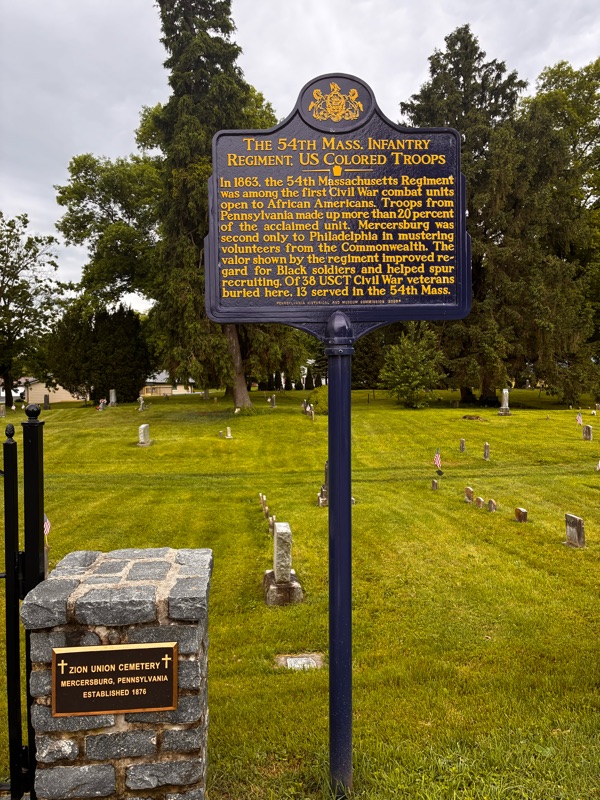
They were the men of the 54th Massachusetts Volunteer Infantry, the first Black regiment recruited in the North during the Civil War. These were fathers, husbands, and sons who left everything behind to fight for a country that still didn’t see them as equals. Their courage at Fort Wagner in 1863 stunned the nation. They charged into a hail of gunfire, knowing the odds were against them, and gave everything they had.

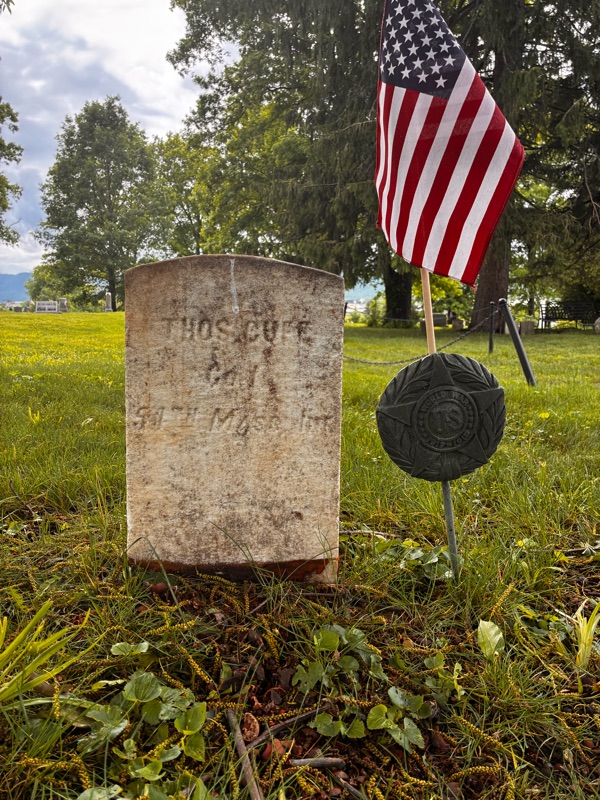
Among them were dozens of men from the small town of Mercersburg, Pennsylvania — a free Black community just above the Mason-Dixon Line. Eighty-eight local men answered the call, with many joining the legendary 54th and 55th Massachusetts. Today, at least thirty-eight Civil War veterans rest in Zion Union Cemetery in Mercersburg, including thirteen from the 54th — the largest known group from that famous regiment buried together in any private cemetery.

These weren’t just soldiers. They were neighbors who chose to risk their lives for a promise that wasn’t guaranteed to them. They fought so their children and grandchildren could grow up free.

This Memorial Day, as we honor all who gave their lives in service, let us especially remember these men. Their sacrifice helped save the Union and helped end slavery. Their blood helped write the next chapter of American freedom.

Freedom was never free — and these men paid the ultimate price for it. Let us never forget them.

Sacred Gound Stay safe Bob 

Apr 28, 2026

Fire: The Spark That Made Us Human


About 1.5 million years ago, our ancestors learned to control fire — and the world changed forever.

Cooking food unlocked massive amounts of energy. Our brains grew, our bodies changed, and we had fuel left for more than just staying alive.

Fire gave us warmth through ice ages, protection from predators, stronger tools, and something even deeper — a place to gather at night. Around that shared flame, language, stories, and culture were born.

It reshaped the planet too. We used fire to clear land, create metal, make pottery, and eventually power the industrial world.

One spark didn’t just help us survive. It made us human.

Early humans started with friction — rubbing sticks together, like the bow drill or hand drill, until the wood glowed and an ember formed. Later came percussion: striking flint against iron pyrite or steel to throw sparks into Chaga, charred or natural tinder.

From rubbing two sticks together to striking a modern ferro rod, the spirit is the same — turning nothing into life-giving flame.


Stay safe, Bob

Apr 26, 2026

Standing at Nessmuks Grave

I finally met one of my writing heroes.

George Washington Sears—Nessmuk—was born in 1821, battled lifelong tuberculosis, and at 59 paddled into the Adirondacks in feather-light canoes despite doctors’ grim predictions. He called it “go light,” lived simply in the wild, healed his lungs, and wrote Woodcraft—a book that taught generations how to travel lightly and respect the woods.

He fought clear-cutting and defended the forests he loved. He died in Wellsboro in 1890 at age 68. His grave marker simply reads NESSMUK.

Visiting him reminded me how one small, coughing man refused to let illness steal his dreams. He chased solitude, found peace among the pines, and fought to protect it. 


In shadowed lungs where TB clenched its fist,

Nessmuk broke free with one determined stroke of the paddle.

His birch canoe sliced through black Adirondack waters

while mist-veiled mountains watched a frail man chase his dream.

No sickbed could hold him. In raw, quiet solitude

he found the peace he’d been searching for,

scribbled his hope across mossy pages,

and begged the axe to leave the ancient woods untouched.

One coughing man, one simple blade,

cheated death on his own fierce terms.

We live soft in our comfort, yet still we ache

to find that same wild breath and pass his light along.

If you’re ever near Wellsboro, stop by the cemetery. Stand there. Say thank you. I did.


Stay safe, Bob

Apr 13, 2026

Escape


The moon slips silver across still water,

frogs chant their low, ancient hymn.

A fish rises — one clean splunk

and the night swallows it whole.

I sit where the ancestors once piled their stones,

their twilight mounds breathing under moss.

No engines, no voices, just the lake

holding the stars like a quiet promise.

Blood under the desk stays far away.

Here the cycle turns without hurry —

birth, hunger, death, and the soft splash of return.

I breathe, and for once the world lets me.

Stay safe, Bob

Apr 12, 2026

History around us: The forgotten victim of the Enoch Brown massacre


      Most people only know about the schoolhouse.

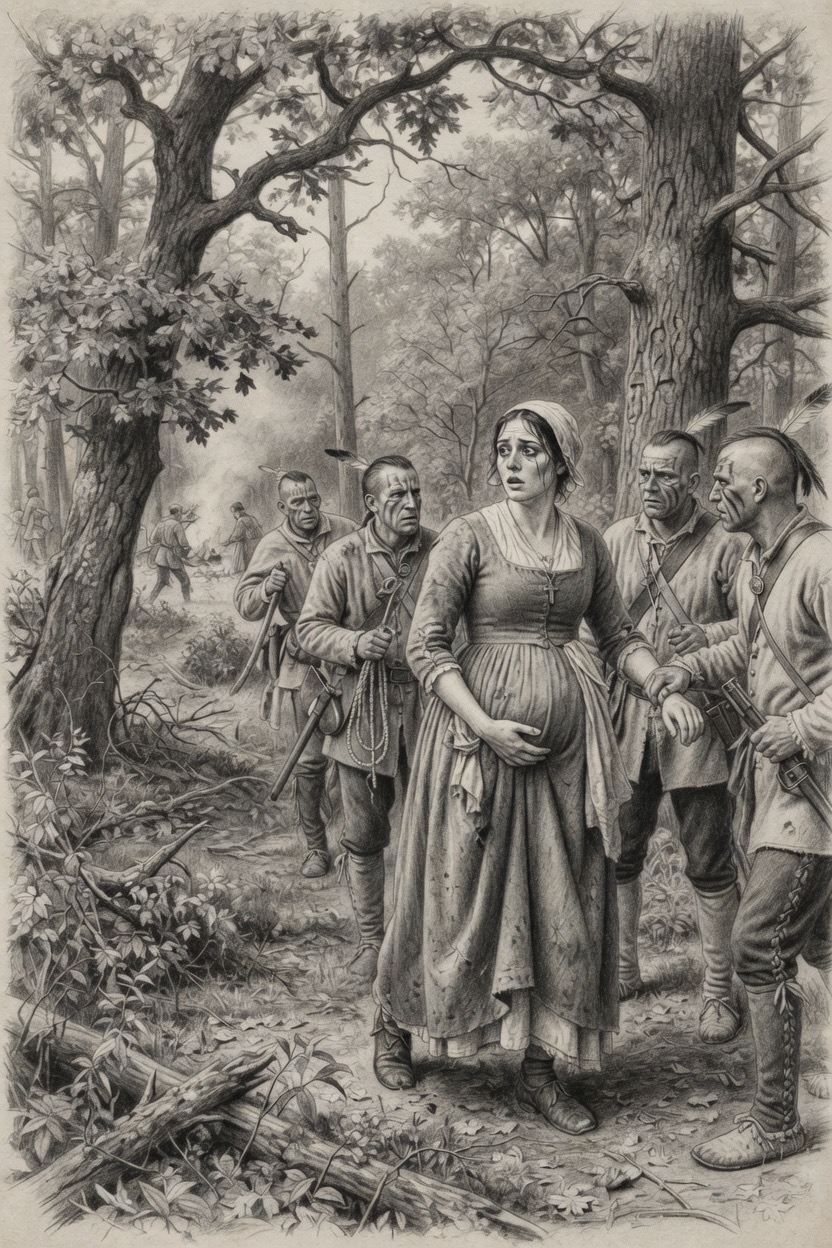
They don’t know that the same four Lenape warriors struck the day before, July 25, 1764, in Peters Township near Bridgeport.

      Susan King Cunningham was born about 1735, in what was then Cumberland County, Pennsylvania — which later became Franklin County. She was the daughter of Robert King, a Scotch-Irish settler. By the 1750s, Susan’s family had pushed west into the frontier of Peters Township. Around 1757, she married Hugh Cunningham.             They settled on a homestead near the small settlement of Bridgeport, later known as Marks. Their home stood close to McDowell’s Mill and its stockaded fort. She was 29 years old and pregnant with another child.

    On that July day she was walking through the woods to visit a neighbor when the warriors caught her. They beat her to death and scalped her. The warriors then cut the unborn child from her body and laid the infant on the ground beside her. That’s exactly how her family found her.

    The very next morning those same warriors walked into Enoch Brown’s classroom. They killed the teacher and ten children, scalping every one of them. Only one boy lived.

These two killings — a pregnant mother and a classroom of kids — tore through the Conococheague Valley. Eight months later, that same fear and rage fueled the Black Boys Rebellion, when men from these hills painted their faces black, burned supply wagons, and twice attacked Fort Loudoun.

    Susan has no grave marker. No plaque. No park. Nothing. Just a few forgotten lines in dusty books.

But out here, we remember the ones the history books left behind — because those are the stories that show how hard this land really was.


This is the kind of history we walk past every day out here in the backcountry, quiet ground that still remembers.

Sacred ground 


Mar 24, 2026

Test

I’m thinking about blogging again, 
Over the years my life has changed, times have changed. And technology has changed.
I hope you like the future content.
With the advent of AI to do research I hope to bring subjects and history alive and honer our pasts.
Stay safe. Bob