Jun 23, 2026

History around us: From Black’s Trading Post to the Siege of Fort Loudoun: The 1765 Frontier Uprising


George Croghan was born around 1718 in Ireland. He arrived in Pennsylvania in 1741 and became one of the most influential and controversial fur traders on the frontier, known as the “King of the Traders.” By the 1760s he also served as Deputy Superintendent of Indian Affairs.

In early 1765, Croghan secretly arranged a large shipment of trade goods — including rum, gunpowder, tomahawks, and scalping knives — in direct violation of the Royal Proclamation of 1763. To the frontier settlers, still mourning loved ones lost in recent massacres and living in constant fear, this was seen as a kind of murder — illegally trading at the expense of the blood and treasure of the frontiers.

On March 5, 1765, the pack train stopped at Pawling’s Tavern south of Greencastle. When a package broke open and spilled what appeared to be scalping knives, word spread rapidly. The train continued north past the old Black’s Trading Post area and was confronted near Justice William Smith’s stone house on North Main Street in Mercersburg. Angry locals demanded the goods be stored at Fort Loudoun. When the drivers refused, James Smith and a small group attacked the train the next day at Sideling Hill and destroyed most of the goods.

James Smith and the Black Boys

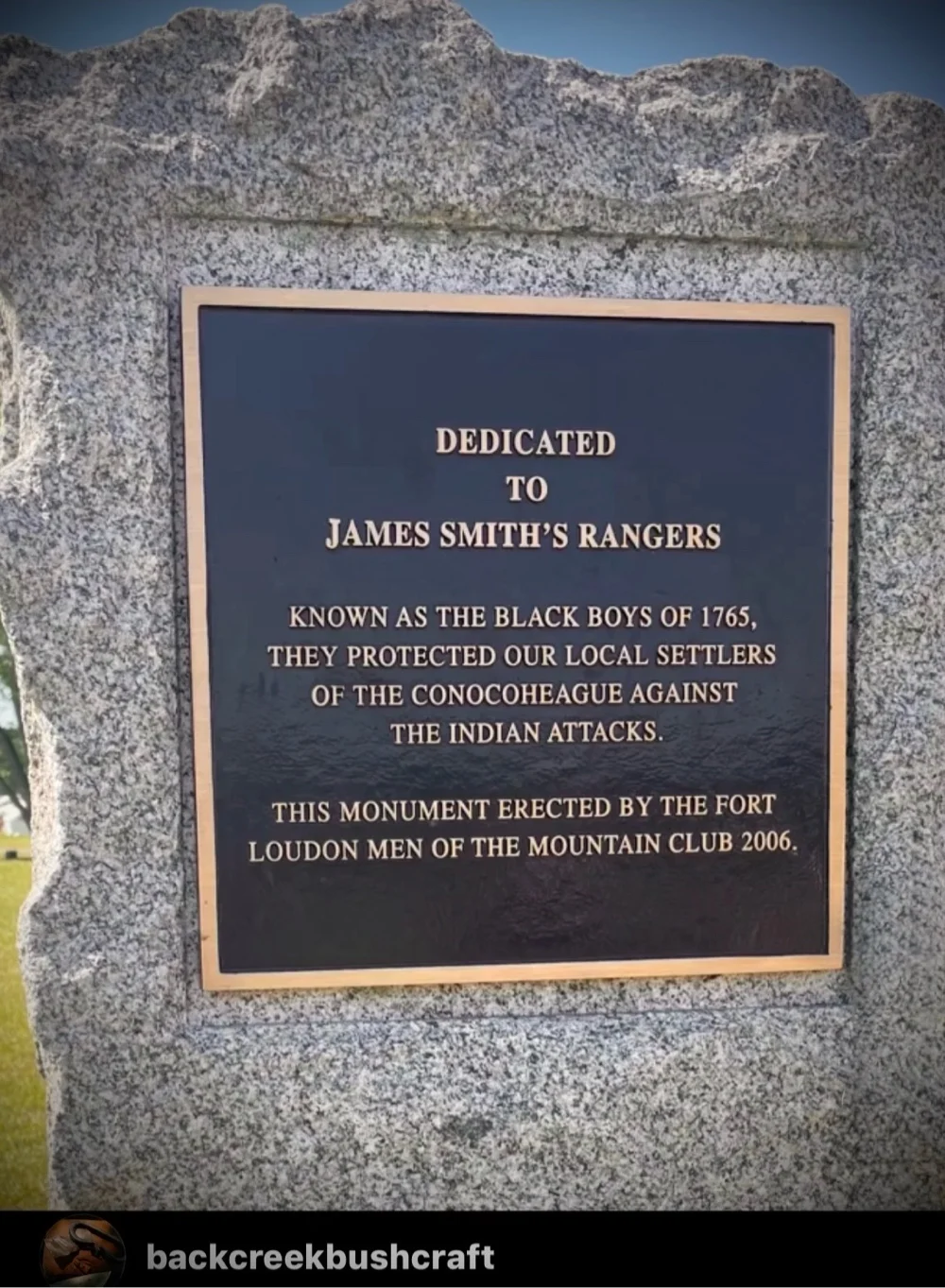
James Smith had been captured by Delaware Indians in 1755 at age 18 and lived among them for several years. He trained his men in Native-style warfare, having them dress in Indian clothing and paint their faces red and black. The British referred to them as the Black Boys.

Justice William Smith, who had purchased Black’s mill and trading post in 1759, supported the settlers from his position as magistrate. His house became their headquarters, and he issued official permits for inspected goods.

British troops from Fort Loudoun confiscated nine rifles — essential tools needed for survival on the frontier. To the settlers, this was the final outrage — having their own means of hunting and self-defense taken while goods they believed were meant to kill them flowed westward.

After months of escalating tensions, James Smith gathered several hundred men and besieged Fort Loudoun in November 1765. After two days of surrounding the fort and maintaining fire, the British finally returned the confiscated rifles.

This uprising revealed the deep fury of frontier families who felt abandoned and betrayed by distant authorities more concerned with trade profits than protecting their lives.

Sources:

•  James Smith’s An Account of the Remarkable Occurrences in the Life and Travels of Col. James Smith (1799)

•  Pennsylvania Archives (depositions and letters)

•  smithrebellion1765.com

•  Pennsylvania Historical & Museum Commission records

Research assisted by historical archives and period accounts.

Jun 22, 2026

History around us: The Killing of Frank Jones: Murdered by Union Soldiers in Chambersburg, June 1861

On June 1, 1861, just weeks after the Civil War began, a mob of Union soldiers murdered Frank Jones, a 41-year-old free Black man, in Chambersburg, Pennsylvania.

Jones lived in Wolfstown, a free Black neighborhood on the western edge of town along West Loudon Street, Washington Street, and Water Street, near the Conococheague Creek. He ran a small hotel and sold whiskey there.

That evening, soldiers from the 2nd and 6th Pennsylvania Infantry tried to force their way into his home. When Jones and his wife Sarah refused them entry, one soldier threw a rock at Sarah’s head. Jones fought back, grabbed a double-barrel shotgun, and shot two soldiers in the legs with buckshot.

He fled out the back and ran north along the creek, across West Market Street, up Franklin Street past Cedar Grove Cemetery, and reached the home of District Attorney George Eyster on Federal Hill, near the intersection of Franklin and Pleasant streets.

Mrs. Eyster hid him in the kitchen chimney, but the soldiers found him and dragged him out. Lieutenant Morgan Bryan of the 7th Pennsylvania Infantry shot him at point-blank range on the front lawn. As Jones attempted to get up and run, Bryan continued shooting and then repeatedly stabbed him with his sword. Other soldiers joined in, firing their weapons and using bayonets. Jones was struck with more than twenty wounds.

Sergeant Michael O’Reilly of the 8th Pennsylvania Infantry wrote home two days later. After describing the chase, he noted that once word spread that soldiers had been shot by a Black man, “then commenced the fun.” His letter reveals the casual, callous attitude some Northern soldiers held toward Black lives in the early days of the war.

Bryan deserted the next day. He surrendered nearly three years later, was convicted only of manslaughter in 1864, sentenced to two years, but served just nine months before being pardoned.

Sarah Jones and their four children, ages roughly two to fourteen, disappear from local records after the murder. Their fate remains unknown.

Today, Wolfstown is the site of the Southgate Mall along Water and West Loudon streets. The Eyster house on Federal Hill was demolished in the 1970s; the site is now an empty yard.

This murder of a free Black man by Union troops in a Northern town has been largely erased from Civil War memory, but he deserves to be remembered.

Stay safe Bob 

Sources:

•  Jake Wynn’s research at wynninghistory.com (primary source for locations and details)

•  Sergeant Michael O’Reilly’s letter, published in the Luzerne Union, June 1861

•  Contemporary accounts in the Semi-Weekly Dispatch and Valley Spirit (Chambersburg newspapers)

•  Trial records and Brian Stamm’s article in the Journal of Franklin County 

Research assisted by historical archives and period  accounts 

Jun 21, 2026

Your Bushcraft Gear Is Saving Lives on the Other Side of the World


Most of us in the bushcraft community carry a LifeStraw or Sawyer filter in our kits because we know clean water can be the difference between life and death in the woods. But there’s another side to these tools that most people never hear about.

It’s easy to live in our bubble. We worry about the next big storm, the perfect bushcraft knife, or finding dry wood. Meanwhile, on the other side of the world, millions of children get sick or die every year simply because they don’t have clean water to drink. We don’t see it, so it’s easy to forget it exists.

That little straw in your pack isn’t just a backup for questionable stream water on a weekend hike. LifeStraw took the technology that survivalists trust and turned it into something much bigger. For every product they sell to folks like us, they provide clean water to a child in need for an entire year.

Think about that for a second. Buying a piece of survival gear you were going to get anyway quietly helps a child on the other side of the world drink safe water every single day.

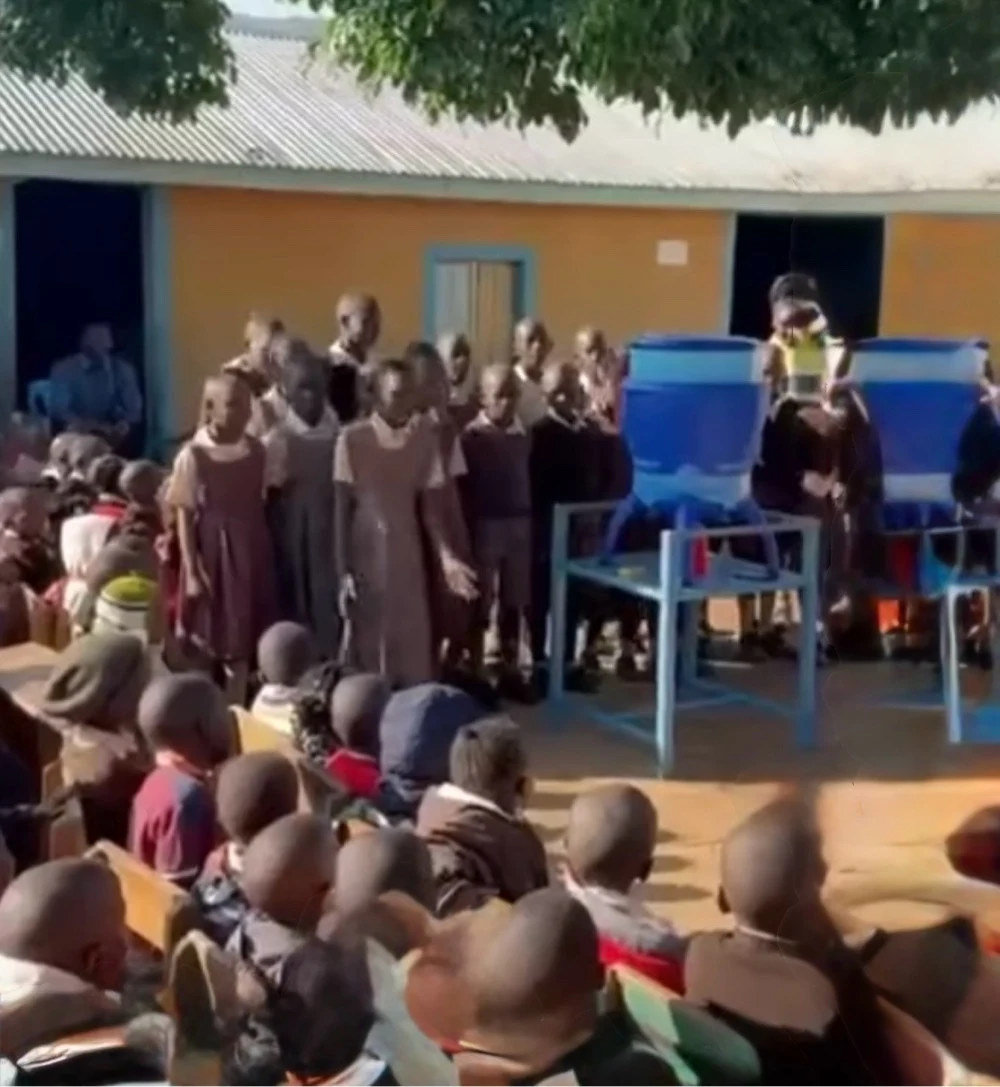
LifeStraw designed durable community systems that serve entire schools — one unit gives up to 100 children clean water for five years. These simple, tough filters match our bushcraft values perfectly: no electricity, easy to maintain, and built to last.

The next time you throw a LifeStraw or Sawyer filter in your pack, remember you’re doing more than preparing yourself. You’re stepping outside your bubble and making a real difference in a part of the world most of us will never see.

Bushcraft has always been about self-reliance. LifeStraw and Sawyer shows us we can practice that same principle while helping others at the same time.


As the Talmud teaches: If you save one life, you save the world.

Stay safe, Bob