 |
George Croghan was born around 1718 in Ireland. He arrived in Pennsylvania in 1741 and became one of the most influential and controversial fur traders on the frontier, known as the “King of the Traders.” By the 1760s he also served as Deputy Superintendent of Indian Affairs.
In early 1765, Croghan secretly arranged a large shipment of trade goods — including rum, gunpowder, tomahawks, and scalping knives — in direct violation of the Royal Proclamation of 1763. To the frontier settlers, still mourning loved ones lost in recent massacres and living in constant fear, this was seen as a kind of murder — illegally trading at the expense of the blood and treasure of the frontiers.
On March 5, 1765, the pack train stopped at Pawling’s Tavern south of Greencastle. When a package broke open and spilled what appeared to be scalping knives, word spread rapidly. The train continued north past the old Black’s Trading Post area and was confronted near Justice William Smith’s stone house on North Main Street in Mercersburg. Angry locals demanded the goods be stored at Fort Loudoun. When the drivers refused, James Smith and a small group attacked the train the next day at Sideling Hill and destroyed most of the goods.
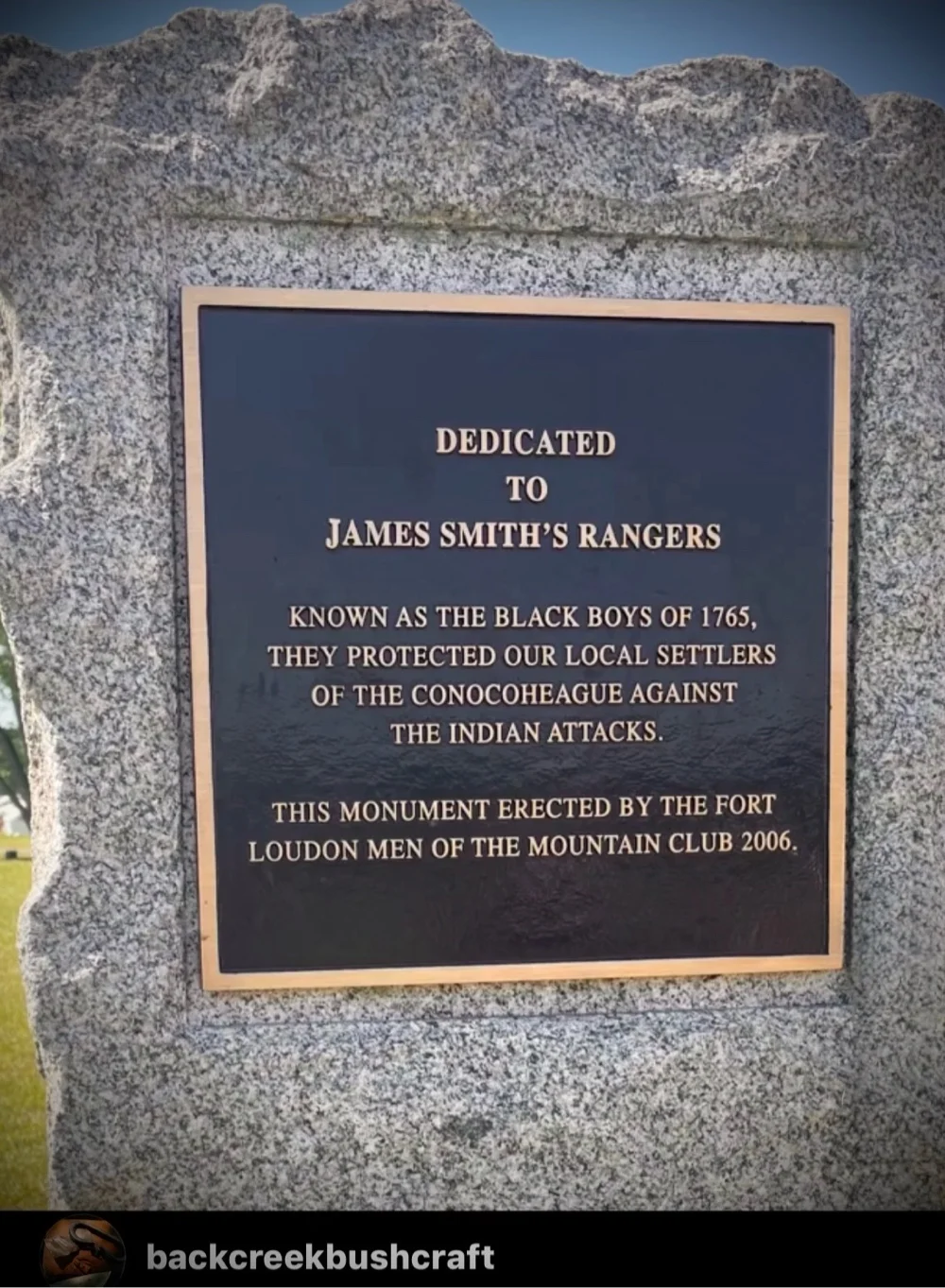
James Smith and the Black Boys
James Smith had been captured by Delaware Indians in 1755 at age 18 and lived among them for several years. He trained his men in Native-style warfare, having them dress in Indian clothing and paint their faces red and black. The British referred to them as the Black Boys.
Justice William Smith, who had purchased Black’s mill and trading post in 1759, supported the settlers from his position as magistrate. His house became their headquarters, and he issued official permits for inspected goods.
British troops from Fort Loudoun confiscated nine rifles — essential tools needed for survival on the frontier. To the settlers, this was the final outrage — having their own means of hunting and self-defense taken while goods they believed were meant to kill them flowed westward.
After months of escalating tensions, James Smith gathered several hundred men and besieged Fort Loudoun in November 1765. After two days of surrounding the fort and maintaining fire, the British finally returned the confiscated rifles.
This uprising revealed the deep fury of frontier families who felt abandoned and betrayed by distant authorities more concerned with trade profits than protecting their lives.
Sources:
• James Smith’s An Account of the Remarkable Occurrences in the Life and Travels of Col. James Smith (1799)
• Pennsylvania Archives (depositions and letters)
• Pennsylvania Historical & Museum Commission records
Research assisted by historical archives and period accounts.


No comments:
Post a Comment